How to Reduce Dust at Home With Practical Daily Habits
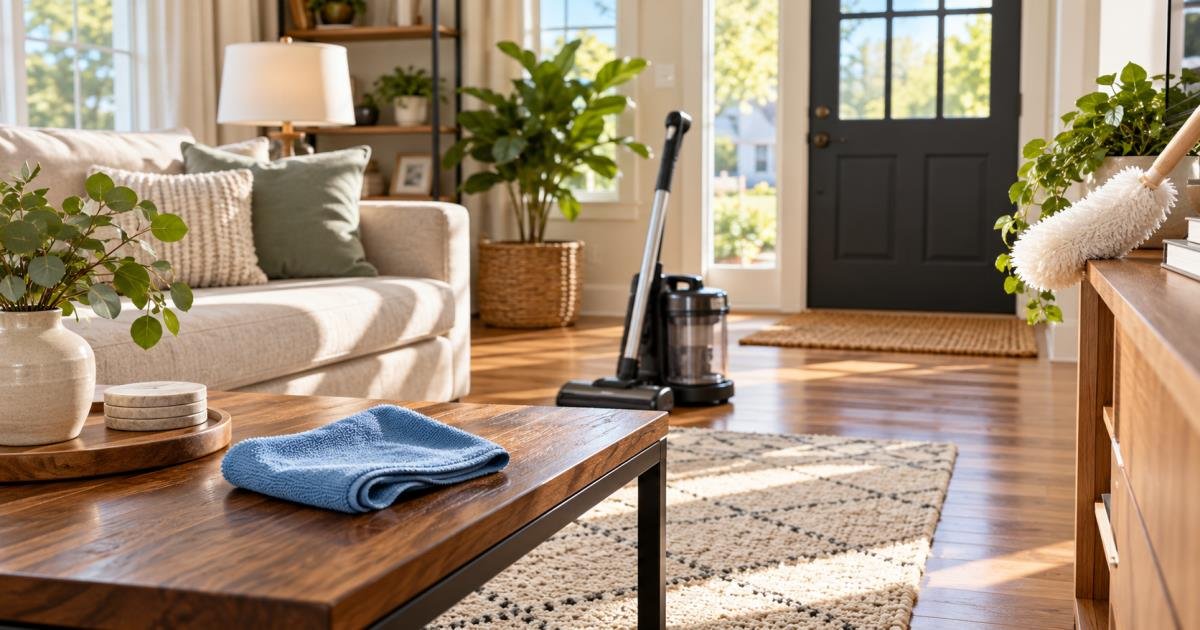
Dust returns because a home is lived in: fibers shed from fabric, outdoor particles enter through doors and windows, pets contribute dander, and everyday movement keeps small particles circulating. The most useful response is not a single intense cleaning day. It is a handful of habits that reduce what comes in, capture what settles, and make the air system easier to maintain.
Start With the Places Dust Enters
Entryways are a major source of outdoor particles. Use a durable mat outside and inside the main door when the layout allows, shake or vacuum them regularly, and give wet or muddy shoes a defined place. The entryway clutter guide can help create a small landing zone that keeps footwear and bags from moving dirt farther into the home.
Windows and doors can also let dust in through gaps. Keep screens clean, close windows during nearby construction or heavy outdoor dust when practical, and check weatherstripping if you notice drafts or visible debris. Do not seal a home so tightly that ventilation suffers; if indoor air quality is a concern, follow local professional or public-health guidance.
Use the Right Order When Cleaning
Work from high surfaces down so you do not move dust onto a floor you just cleaned. Begin with ceiling fan blades, high shelves, picture frames, and the tops of cabinets, then wipe furniture and finish with the floor. A slightly damp microfiber cloth can capture dust more effectively than a dry cloth that pushes it into the air, but use the method appropriate for the surface.
Wash or replace cleaning cloths after use. A dusty cloth simply redistributes particles from one room to another. For delicate electronics and finished wood, use manufacturer guidance rather than adding moisture or cleaners. Do not spray products into vents, outlets, or electronic equipment.
Vacuum Floors and Upholstery Regularly
Vacuuming removes dust that a broom can sometimes scatter. Use a hard-floor setting on wood or laminate and an upholstery attachment for sofas, chair cushions, and fabric headboards when the material allows. Move slowly enough for the vacuum to pick up debris, especially along baseboards and under the front edge of furniture.
Check the vacuum bag, bin, filter, and brush roll according to the manufacturer's instructions. A full bin or clogged filter can reduce performance and release odor or dust when opened. If someone in the household has allergies or asthma, consult a healthcare professional for individual advice and follow the appliance maker's guidance for filter care.
Wash Fabrics That Hold Dust
Blankets, pillow covers, pet bedding, curtains, and area rugs can hold dust between floor cleanings. Wash items according to their labels and vacuum rugs regularly. For curtain care, use the curtain care guide rather than treating every fabric the same.
Do not try to wash an item that is labeled dry clean only or that has a delicate backing without understanding the care requirements. For large rugs, upholstered furniture, or mattresses, use a method suited to the material and avoid introducing excess moisture that can create another indoor-air problem.
Maintain Heating and Cooling Equipment Safely
Heating and cooling systems can affect how dust moves through a home. Check the filter size, installation direction, and replacement schedule in the equipment manual. Replace filters only with the type and rating approved for the system. A more restrictive filter is not automatically better if the system is not designed for it.
Do not open sealed equipment, reach into moving parts, or attempt duct work beyond ordinary homeowner maintenance. Unusual odors, weak airflow, repeated dust buildup around vents, or a system that does not operate normally may call for a qualified HVAC professional. The future HVAC filter guide will cover basic filter replacement in more detail.
Make Small Daily Habits Easy
Put a microfiber cloth where you naturally notice dust, such as near the television stand or in a cleaning caddy. Spend two minutes clearing one visible surface before bed, and dry-mop a busy path when you see grit. Tie these tasks to routines you already have instead of creating a long new checklist.
A weekly reset can include quick vacuuming, laundering one dust-catching textile, and wiping a high-touch area. The weekly home reset guide can help turn those tasks into a pattern that fits a busy household.
Reduce Dust in Bedrooms and Sleeping Areas
Bedrooms can collect dust on bedding, under beds, lamps, and electronics. Change and wash bedding according to its care label, vacuum around the bed, and keep the floor clear enough that a vacuum or mop can reach it. A crowded under-bed area often traps lint and makes cleaning less effective, so store only items that are contained and easy to move.
Consider how many textiles the room really needs. Extra decorative pillows, heavy throws, and open baskets can be pleasant, but they also require regular care. You do not need to remove everything; choose pieces you are willing to wash or vacuum. The small bedroom organization guide can help make the floor and storage areas easier to maintain.
Store Items So They Are Easier to Clean Around
Open shelves can be useful, but they need a realistic dusting routine. Group smaller items on a tray so they can be lifted together, and use closed containers for seasonal supplies or rarely used objects. Avoid packing closets and cabinets so tightly that dust and lint build up in places you cannot reach.
When organizing, leave a little space between large furniture and the wall where practical. This makes it easier to vacuum baseboards and inspect for dampness or pests. Do not use organization products merely to hide dust; a simple category with room to clean around it is more useful than a perfectly filled shelf.
Common Dust-Reduction Mistakes
Fragrance products and frequent spraying may make a room smell cleaner without removing the source of dust. Overusing them can also leave residue on surfaces. Another mistake is dusting only visible tabletops while ignoring fabrics, entry mats, and floor edges where particles accumulate.
Do not assume every dust concern can be solved with more cleaning. Persistent visible debris from a vent, water damage, pest activity, or construction-related particles may need a different response. Identify the source first, use ordinary cleaning for ordinary dust, and seek qualified guidance for conditions that are outside normal home maintenance.
Conclusion and Next Steps
A lower-dust home comes from repeatable habits, not a perfect cleaning day. Keep outdoor grit near the door, clean from high to low, maintain fabrics, and use heating and cooling equipment as directed. Pick one room to improve this week, then use the simple cleaning routine to keep the progress going. Review the routine after two weeks and keep only the steps your household can maintain during ordinary busy weeks without adding unnecessary products or complicated schedules.
For a useful first experiment, vacuum the entry mat, wipe one high shelf, and wash one throw blanket. Notice which action makes the room feel cleaner for the least effort, then make that action part of your usual reset.
Conclusion and Next Steps
Dust reduction works best when it combines cleaner entryways, gentle surface care, regular vacuuming, clean fabrics, and safe equipment maintenance. Choose one source of dust to address this week, then add another habit only after the first one feels ordinary. For a practical schedule, continue with the simple cleaning routine.