How to Keep Entryway Clutter Under Control
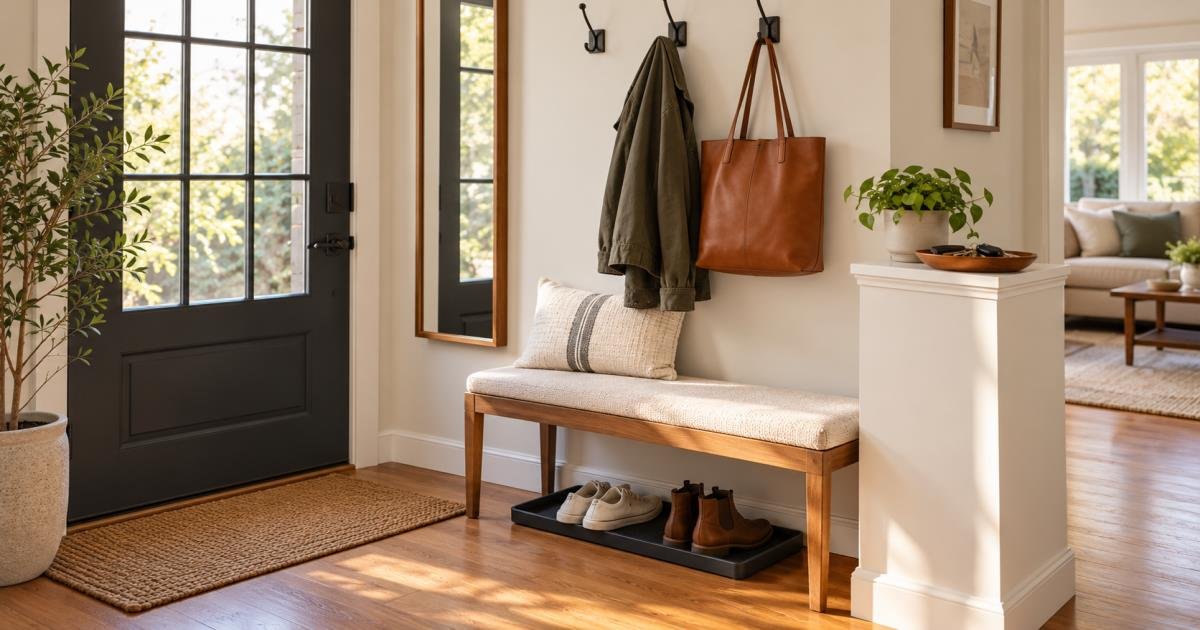
An entryway collects the things a household needs while leaving and returning: shoes, keys, bags, mail, coats, pet gear, and packages. The goal is not an empty hallway. It is a small landing zone that keeps everyday items available without letting them spread into the rest of the home.
Notice What Actually Arrives at the Door
Stand in the entryway at the end of an ordinary day and make a short list of what lands there. A family with children may need places for backpacks, shoes, and library books. An apartment dweller may need keys, a transit pass, and a small umbrella. A dog owner may need a leash, waste bags, and a towel for wet paws. Buy or add storage only after identifying these real categories.
Start with the items used daily. Seasonal gear, sporting equipment, and extra shoes do not need the most convenient spot. If the entryway attempts to store every coat and every bag, it will become crowded even with attractive organizers. Move overflow to a closet, bedroom, or another defined storage area.
Create a Landing Zone for Keys, Mail, and Small Essentials
Give small items one visible home near the door. A shallow tray on a console, a small wall shelf, or a drawer can hold keys, sunglasses, and a wallet. Choose a place that is easy to reach but does not expose private information. Avoid an open bowl for car keys if the entry is visible from outside or accessible to visitors.
Mail needs an especially short path. Bring it inside, remove obvious junk mail near recycling, and put action items in one contained folder or inbox. Do not let mail become entryway decoration. Bills, medical information, and account offers should move to a secure action station or filing system rather than remain on a console table for days.
Give Shoes and Coats a Realistic Limit
One or two pairs of shoes per person may belong near the door; the rest should have a different home. A low tray, washable mat, or narrow shoe shelf helps contain daily shoes and protects flooring from dirt. In wet weather, place a boot tray nearby and empty it after shoes dry. Avoid stacking shoes in a tall, unstable pile where they block the route through the entry.
Hooks work well for the coat currently in use, a bag, or a hat, but each hook needs a limit. A row that holds every jacket owned by the household quickly becomes a wall of clutter. Put out-of-season coats away, and choose hooks that can be installed safely and in accordance with a rental agreement when applicable.
Use Storage That Fits the Space
A small entryway does not require a large bench. In a narrow hall, a few hooks, a slim shelf, and a tray may be all that will fit without reducing the walking path. In an apartment, a lidded bench can provide seating and hidden storage if the lid is safe to use and the furniture does not block the door swing. Measure the walkway before adding furniture, including space needed for an open door and for carrying groceries inside.
Choose containers that match one category. A basket for returns, a bin for pet supplies, or a tote for reusable shopping bags is easier to maintain than one large catchall. Labels can help a busy household, but only if people understand them and the categories stay simple. When a bin is full, review it rather than putting items on the floor beside it.
Build a Two-Minute Arrival Routine
The system matters less than the habit that follows it. When you come home, put keys in the tray, sort mail immediately, place shoes on the mat, and hang the one coat you are using. This sequence takes less time than looking for those items the next morning. Encourage every household member to do the same version of the routine, adjusted for age and ability.
Once a week, return items that do not belong in the entryway, wipe the tray and shoe area, and check the return basket. A quick reset prevents small piles from becoming a permanent feature. If clutter returns to the same spot, give that category a closer home or reduce what is allowed to stay there.
Make Room for Bags, Deliveries, and Returns
Reusable grocery bags, returns, and parcels can take over an entryway because they all seem temporary. Give each one a deadline and a container. Keep a small bag of reusable totes folded near the door, and return extras to a kitchen drawer or car trunk. Use a labeled return basket only for items that are actually going back to a store, library, friend, or donation center. Add the due date or destination to your calendar so the basket does not become long-term storage.
Packages require a decision too. Break down cardboard promptly if recycling is available, move delivered items to their intended room, and keep receipts or return information with the purchase rather than on the entry table. In a building with shared halls or a front porch visible from the street, avoid leaving packages outside longer than necessary and follow local building rules for deliveries.
Adapt the Entryway for Weather and Safety
Weather creates clutter quickly. Keep a small washable mat or tray for wet boots and a designated place for umbrellas to drip dry without soaking a rug. In snowy or rainy seasons, towels and salt residue may need a separate basket or hook until they can be washed. Check that wet shoes are not placed directly on wood flooring or against a wall where moisture can cause damage.
Keep paths clear enough for everyone in the household to move safely, including visitors using a mobility aid or someone carrying a child. Do not cover exits, block a doorway with a bench, or rely on a pile of shoes that has to be stepped over. A calm entryway supports safety as well as organization.
Let the System Change With the Household
An entryway will change when a child starts school, a new pet arrives, a commute changes, or a season brings different gear. Review the setup when it begins to feel crowded instead of assuming someone is failing to keep it tidy. Remove categories that no longer belong there and test one small adjustment at a time. The most durable entryway system is simple enough to reset on a busy day and flexible enough to grow with the people using it.
Common Entryway Mistakes to Avoid
Do not solve an entryway problem by adding a larger piece of furniture before reducing the categories it must hold. Oversized benches, deep baskets, and decorative consoles can make a narrow space harder to use. Another common mistake is storing private paperwork where anyone walking in can see it. Keep the entryway for arrival and departure tools, and move sensitive records to a secure location.
Finally, do not wait for a full weekend to reset the area. Returning one bag, one pair of shoes, and one piece of mail takes moments. Small daily choices protect the open path and make the front door feel like a welcome rather than the start of another cleanup task.
Conclusion and next steps
Start with the items that cross the threshold every day and give each one a defined home. The family command center guide can support schedules and launch pads, while the weekly reset guide helps keep the entry clear.