How to Build a Simple Cleaning Routine for a Busy Household
A useful cleaning routine does not try to make every room perfect every day. It gives the most important tasks a predictable place in the week, keeps messes from becoming harder to handle, and leaves room for work, family, rest, and unexpected changes.
Start With the Tasks That Affect Daily Life
Begin by noticing what makes the home feel difficult to use: dirty dishes, a full trash bin, bathroom surfaces, laundry, pet hair, or clutter in shared rooms. These jobs deserve a simple routine before low-impact tasks such as polishing furniture or organizing a storage closet. Every household is different, so use your actual pain points rather than copying a detailed checklist that does not match your home.
Choose a short daily reset and a few weekly jobs. A daily reset might mean loading the dishwasher, clearing the table, wiping a kitchen counter after food preparation, and putting items back in their rooms. Weekly jobs can include cleaning the bathroom, vacuuming or sweeping high-traffic floors, changing bed linens, and removing trash and recycling. Put the tasks on days that fit your schedule instead of assigning them all to Saturday.
Use Small Time Blocks
Set a timer for ten or fifteen minutes when you need a starting point. Pick one room or one type of task, gather only the supplies needed, and stop when the timer ends. A short block can clear the sink, vacuum the living room, or reset a bathroom without requiring the motivation for a whole-house cleanup. If you have more time, start another block after a short break.
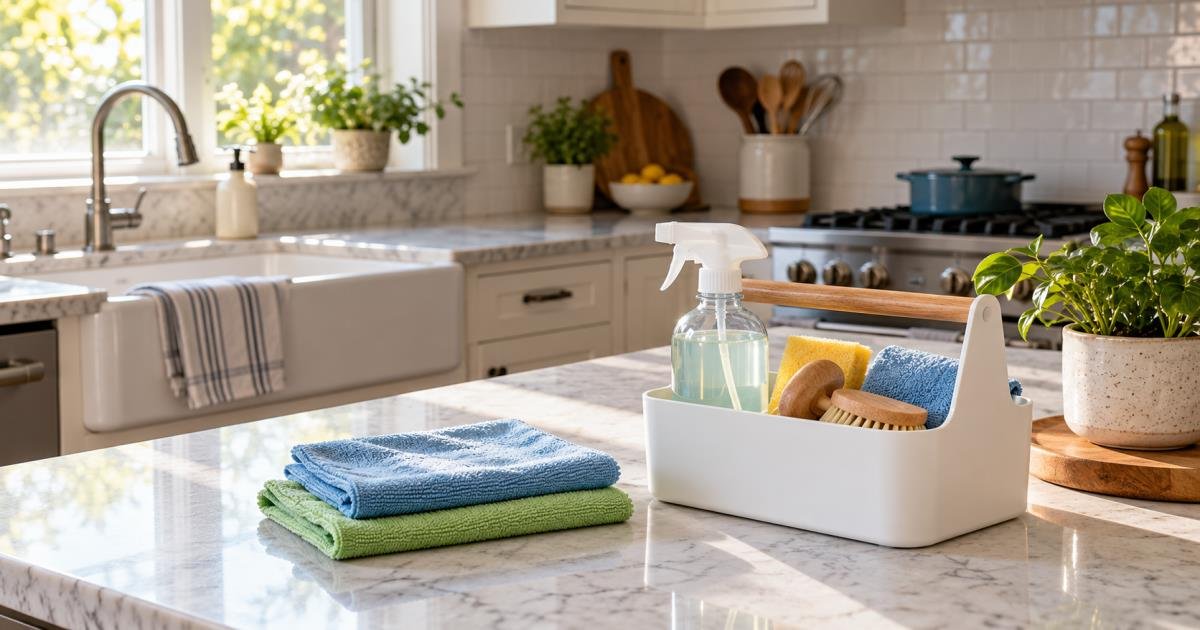
Keep basic supplies close to where they are used. A small bathroom caddy, a kitchen cloth, and a lightweight vacuum or broom reduce the friction of starting. Follow product labels, especially around disinfectants and cleaners that should never be mixed. Use ventilation where directed, keep products away from children and pets, and store them in their original containers.
Create a Weekly Rhythm Instead of a Rigid Schedule
A flexible rhythm is easier to sustain than a strict list. For example, Monday can be laundry, Tuesday can be the bathroom, Wednesday can be floors, and Thursday can be a kitchen check. If one day is missed, move the task forward rather than trying to double the workload. The point is that each area receives attention regularly, not that cleaning happens at a particular hour.
Group tasks that use the same tools or naturally happen together. When washing towels, wipe bathroom surfaces. When taking trash out, collect recycling and check the entryway. When changing sheets, clear items from bedroom floors. Pairing work reduces setup time and makes the routine easier to remember.
Share Work by Ownership
In a shared household, assign clear responsibilities rather than expecting one person to notice everything. One person can handle dishes after dinner while another starts a laundry load or helps children reset shared spaces. Children can put toys away, carry clothing to a hamper, wipe a table, or match socks with guidance appropriate to their age. Give each task a clear definition so it can be completed without a second person redoing it.
Use a visible list only if it helps. A simple whiteboard or shared digital reminder can show what is due this week, but it should not become a source of blame. If a task keeps being skipped, make it smaller, change who owns it, or adjust when it is scheduled.
Focus on High-Touch and Food Areas
Kitchen counters, dining tables, sink handles, bathroom fixtures, and frequently used floors often need more attention than decorative spaces. Clean food-preparation surfaces after use, wash dishcloths regularly, and address spills before they become sticky or stained. In bathrooms, a quick wipe of the sink and counter between deeper cleanings can make the weekly task much faster.
Cleaning and disinfecting are not the same. Routine soap and water or an appropriate cleaner can remove soil from many surfaces; disinfectants should be used when they are needed and according to the product label. Never mix cleaners, especially products containing bleach and ammonia. If someone in the household is ill or a surface has been contaminated, follow public-health and product guidance for the situation.
Plan for Low-Energy Weeks
Busy households need a minimum version of the routine. On a demanding week, focus on food cleanup, trash, laundry basics, bathroom hygiene, and clear paths through the home. Let lower-priority tasks wait. Keeping a short “enough for now” list prevents the common cycle of doing nothing until the house feels overwhelming and then attempting an exhausting catch-up day.
A routine earns its value when it can survive imperfect weeks. Review it monthly, remove tasks that do not matter, and keep the supplies and time blocks simple. A home that is safe, functional, and comfortable is a better target than one that looks untouched.
Set Up a Supply System That Prevents Duplicates
Store everyday supplies in one known location and check that spot before buying more. A modest set is enough for most homes: a general cleaner appropriate for the surfaces you have, dish soap, microfiber cloths, a bathroom cleaner, a broom or vacuum, gloves, and trash bags. Keep instructions on the label available, and do not transfer cleaners into food containers or unlabeled spray bottles.
Replace supplies before they run out only when they are genuinely used often. An inventory once a month can prevent both an empty dish-soap bottle at the wrong moment and a cabinet filled with half-used products. Use older items first when they are still within their stated shelf life and appropriate for the surface.
Use Checkpoints Rather Than Perfection
A quick checkpoint after meals, before bed, or before guests arrive can keep the routine from slipping. Ask a few practical questions: Are dishes handled? Is food put away? Is there a clear route through the main rooms? Is the bathroom usable? If the answer is yes, the home is functioning even if there are dusting or organizing tasks left for another day.
When a task becomes consistently difficult, find the obstacle instead of adding pressure. A heavy vacuum may be hard to carry upstairs, a hamper may be too small, or cleaning products may be stored far from the bathroom. One practical adjustment can be more effective than a longer checklist. Build the routine around the household you have, then let small, repeatable actions do the work over time.
Know When to Pause and Get Help
Routine cleaning should not require taking risks. Do not stand on unstable furniture to reach high areas, mix products to make a stronger cleaner, or handle a persistent mold, pest, electrical, or plumbing concern as if it were ordinary dirt. Follow the instructions for the products and equipment you use, and contact an appropriate qualified professional or property manager when a problem is beyond routine care.
In a rented home, report water damage, broken ventilation, unsafe flooring, or other maintenance concerns in writing according to the lease. A simple cleaning routine works best when the home itself is safe and in working order.
Keep the routine visible enough to remember but flexible enough to change. A short note on the refrigerator or a shared reminder is sufficient. The objective is a reliable home rhythm, not a scorecard.
Conclusion and next steps
Choose a routine you can complete during a normal week, then revisit it after a month of use. For kitchen-specific care, see how to clean kitchen cabinets; for a manageable household reset, use the weekly reset guide.