How to Prune Common Shrubs Without Cutting Too Much
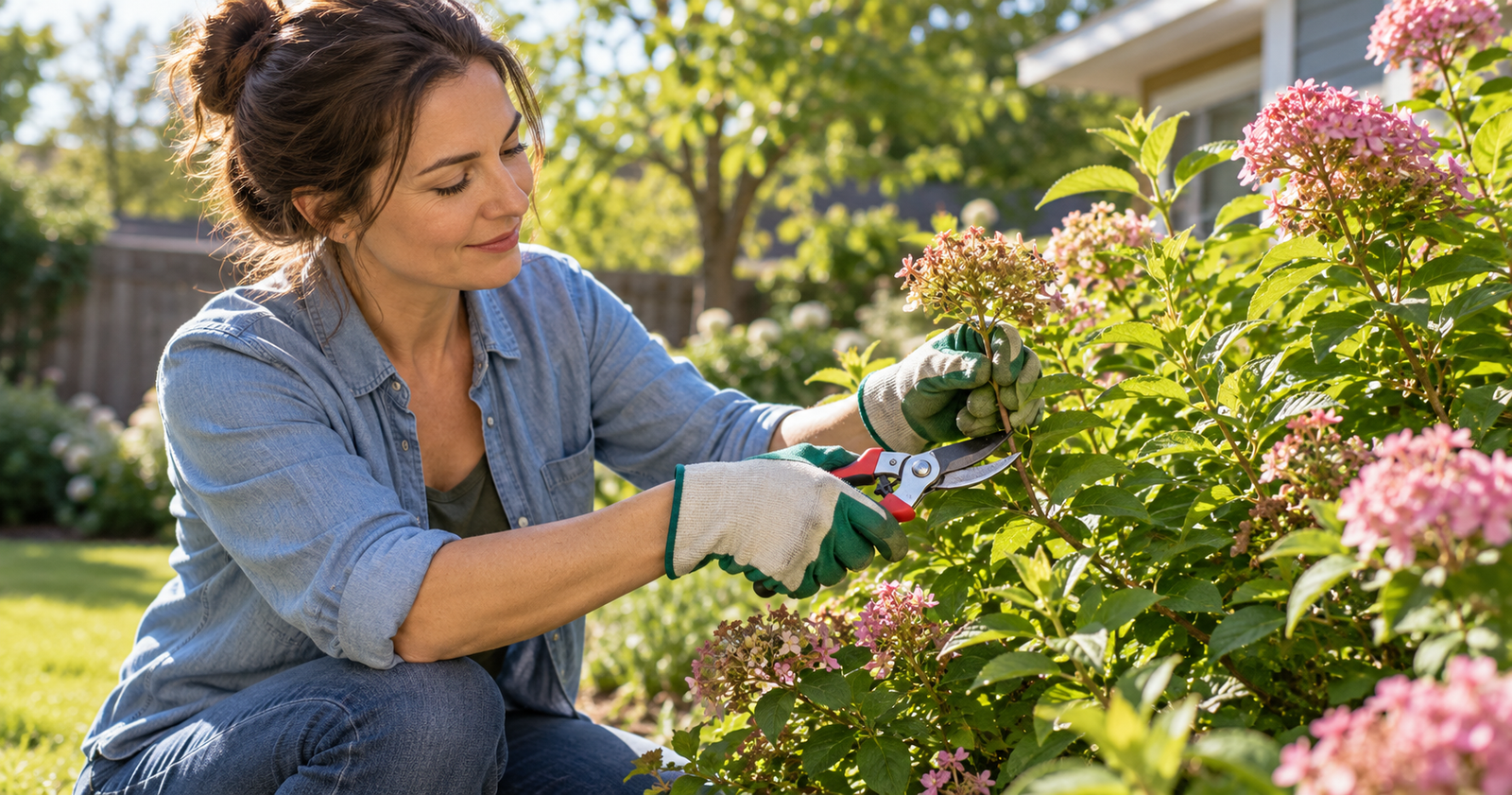
Pruning can make a shrub healthier, easier to walk around, and more attractive—but only when the cut fits the plant and the season. The safest beginner rule is simple: identify the shrub, remove only what you can explain, and stop before a small cleanup becomes a major reshape.
Know what you are pruning
Look up the shrub’s name before cutting. Some bloom on old wood, some on new growth, and some need very little pruning at all. If you cannot identify it, limit yourself to dead, damaged, or crossing branches and wait for local guidance before changing its size.
Start with the three obvious cuts
Use clean, sharp hand pruners for small stems. Remove dead wood back to healthy tissue, branches that rub each other, and clearly damaged growth. Cut just above an outward-facing bud or back to a branch junction; do not leave long stubs. Disinfect tools between plants when disease is suspected.
Avoid shearing by default
Shearing creates a formal outline, but repeated indiscriminate cuts can leave a dense outer shell and a bare interior. For many landscape shrubs, selective thinning cuts are better: remove a few of the oldest stems at their base and keep the shrub’s natural shape. Never remove more than you can justify in one session.
Choose timing carefully
Timing depends on the shrub and local climate. A spring-flowering shrub may lose next year’s buds if it is pruned too early; a damaged branch can be removed whenever it creates a hazard. Check local extension guidance for your plant before major pruning, especially after winter damage.
Use safe limits
Wear eye protection and gloves, keep tools maintained, and do not use ladders or power tools for a first attempt. Stop for plants near power lines, structures, or property boundaries, or when branches are too large for hand tools. A qualified arborist or landscape professional is the right call for those situations.
Let the shrub guide the next step
Step back after every few cuts. If you cannot tell what should go next, you are done for the day. Pair this approach with a low-maintenance garden plan and plants suited to your climate. Good pruning is patient, specific, and usually less dramatic than people expect.