How to Choose Easy Outdoor Plants for Your Climate
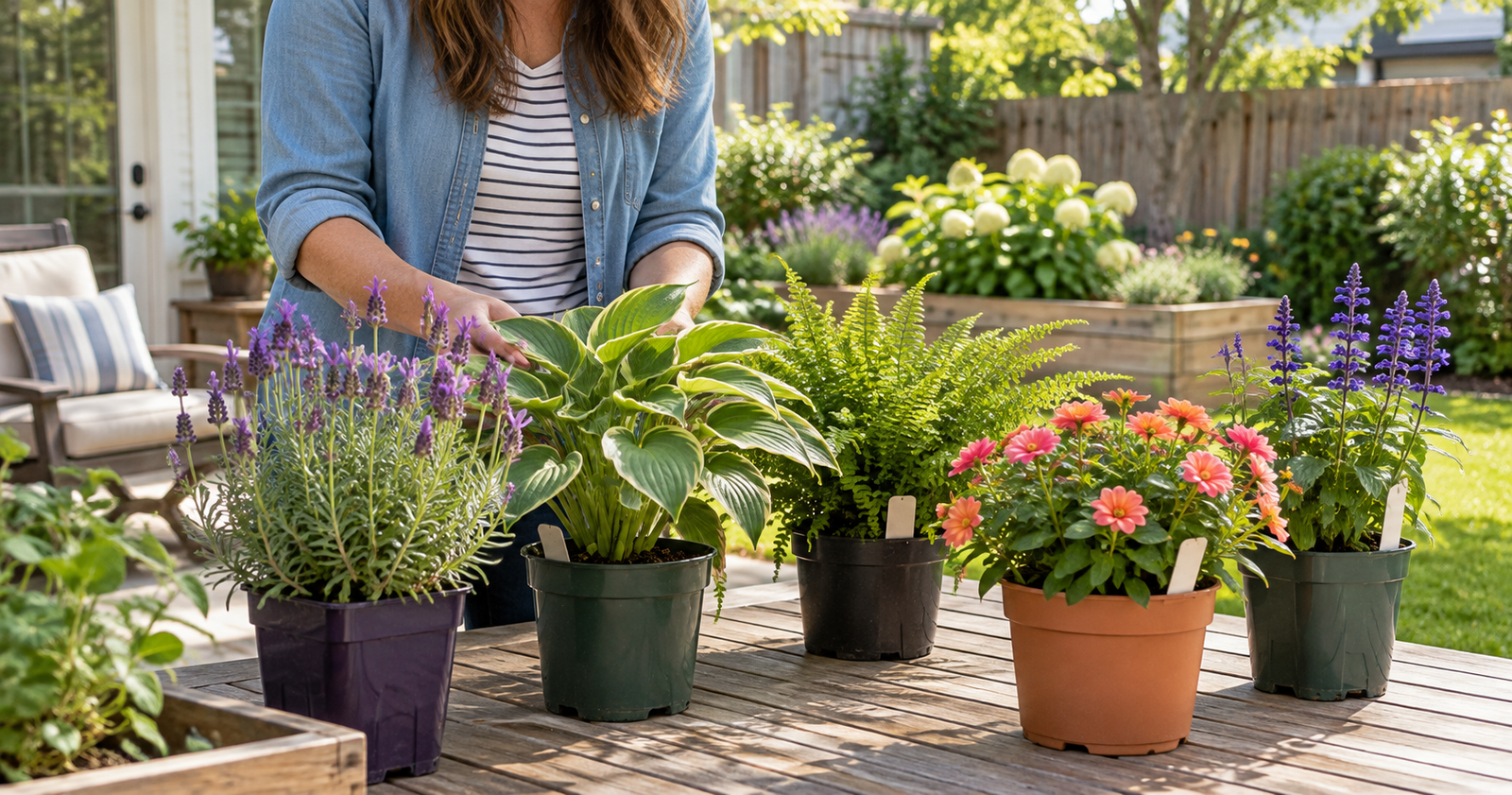
The plant that looks best at a nursery is not always the plant that will be easiest in your yard. A more reliable choice starts with your conditions: how much direct sun the space receives, whether water drains away or lingers, how hot or cold the area becomes, and how much care you can realistically give. When the plant fits the place, gardening becomes less about rescue and more about simple observation.
Begin with your site, not a plant list
Spend a day noticing one small area before shopping. Is it bright all day, sunny only in the morning, shaded by a building, or exposed to reflected heat from concrete? Watch after rain too. A low spot that remains wet needs a different approach from a raised bed that dries quickly. Take photos at morning, midday, and late afternoon; they are more useful than trying to remember how the light felt.
Also consider space. A shrub may look compact in a one-gallon nursery pot but need several feet of width later. Plant labels give mature size, light preferences, and other helpful starting information. Local nurseries, cooperative extension offices, and public gardens can help you interpret those details for your area. Use your local hardiness-zone information as one factor, not the only one: wind, summer heat, rainfall, and soil moisture can matter just as much.
Sort the space by light
For planning, direct sun means sunlight actually reaches the leaves, not simply that the sky is visible. Full-sun plants generally need many hours of direct light; part-sun or part-shade choices are more flexible; shade plants are better where direct sun is brief or filtered. The exact pattern can change as trees leaf out or the sun shifts through the seasons.
| What you observe | What to consider | A beginner-friendly next step |
|---|---|---|
| Six or more hours of direct sun | Sun-loving flowers, herbs, vegetables, and drought-tolerant perennials. | Choose plants labeled for full sun, then water them consistently while they establish. |
| Morning sun and afternoon shade | Plants that appreciate gentler light, especially in hot climates. | Look for part-sun or part-shade labels and avoid judging the spot only at noon. |
| Bright shade or dappled light | Foliage plants and shade-adapted perennials. | Choose for leaf texture and form rather than expecting constant blooms. |
| Hot reflected light near walls or pavement | Heat-tolerant plants and containers that will dry faster. | Check the spot in late afternoon before selecting anything. |
Notice drainage before planting
After a moderate rain, see whether puddles disappear quickly or stay for a day or more. Soil that is compacted or constantly soggy can suffocate roots, while very sandy soil may dry much faster than expected. Do not solve every drainage problem by adding a little potting mix to the planting hole; a small pocket of different material can behave differently from the surrounding soil.
For a first project, containers are a useful way to learn. They let you control the potting mix and move a plant if the light is wrong. Use a container with drainage holes, choose a size that suits the plant’s expected growth, and remember that a pot can heat up and dry out faster than an in-ground bed. For persistent standing water or a significant slope, get local advice before installing plants or changing the grade.
Choose plants for the maintenance you can give
“Low maintenance” does not mean no maintenance. New plants need regular observation while roots establish, and even tough plants need water during some dry periods. The easier choice is one that matches your schedule. If you travel often, avoid a large group of thirsty containers. If you enjoy regular care, a small edible garden may be satisfying. If you want dependable structure, consider native or well-adapted perennials recommended locally.
Buy fewer plants at first. Three well-placed plants teach you far more than a crowded cart of unfamiliar varieties. Group plants with similar light and watering needs. This makes care simpler and reduces the temptation to water everything just because one pot is dry.
Read the label with a practical eye
Check the mature height and spread, light needs, expected bloom season, and spacing guidance. Ask whether the plant is annual or perennial in your area, and whether it is appropriate for a container or a bed. If the nursery label is vague, do not fill in the gaps with optimism. Take a photo of the label and look for advice from a local, credible gardening source before planting.
Be cautious with any plant described as “fast spreading,” especially near natural areas. A vigorous plant can be useful in the right place but troublesome in another. Your local extension service or native-plant organization can help identify plants that are invasive or discouraged where you live.
Plant in a way that gives roots a fair start
Plant on a mild day when possible, water the nursery pot before removing the plant, and set it at the same soil level it had in the container unless the specific plant requires otherwise. Backfill with the existing soil, water it in, and add an appropriate mulch layer around—rather than against—the stem or trunk. Keep mulch away from direct contact with woody stems to reduce trapped moisture.
For the first few weeks, check the root zone rather than relying on the surface alone. A temporary watering schedule may help you remember, but adjust it for rain, heat, and soil moisture. Do not fertilize automatically at planting time unless the product guidance and local recommendations support it.
Use a one-season experiment
Choose one small bed or a few containers and treat the first season as useful research. Note when sun reaches the space, how often the soil dries, which leaves scorch, and which plants still look good during a hot week. A simple notebook or phone photo can reveal patterns that a plant tag cannot.
When a choice does not thrive, that is information—not a reason to keep adding products. Move a container, choose a better-suited replacement next season, or ask a local professional about the site. Once you understand your conditions, you can build confidence with the basics of houseplant care and use a basic household tool kit to measure and set up a small planting area safely. The easiest outdoor garden is one designed around the place you already have.