How to Organize a Closet Without Buying Expensive Storage Products
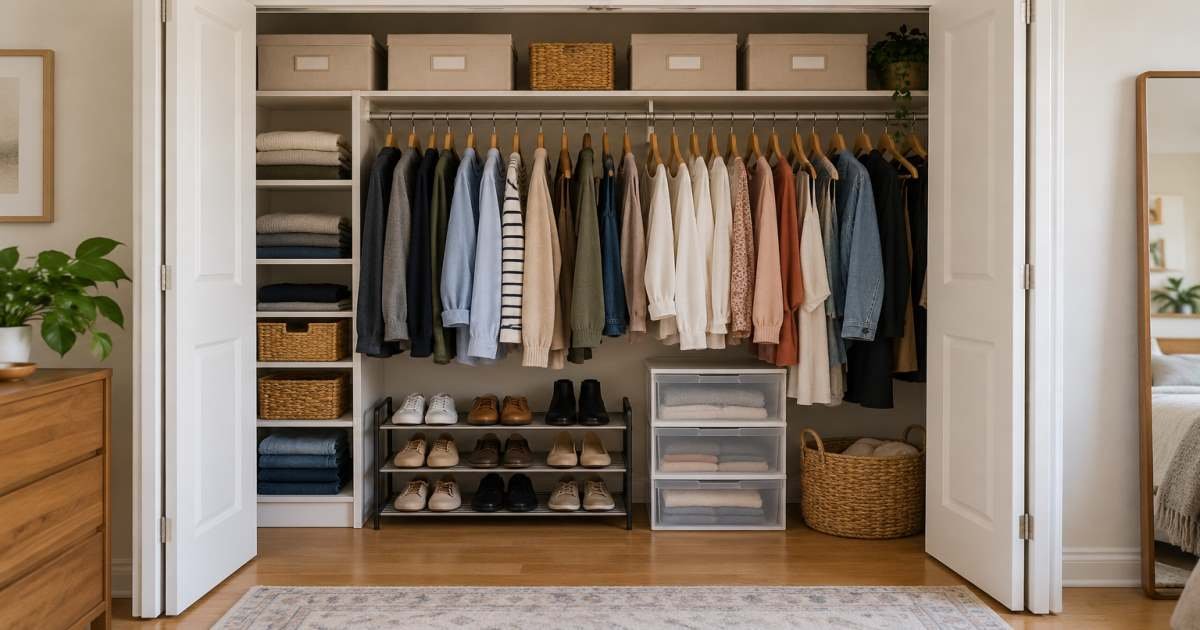
A closet works better when its contents match the way you actually get dressed, store laundry, and change seasons. Start by reducing what no longer fits your life, then use simple categories and the storage you already own before purchasing anything new.
Start With What the Closet Needs to Do
Before emptying shelves, decide who uses the closet and which items belong there. A bedroom closet may need everyday clothes, shoes, laundry supplies, and seasonal layers. A hall closet may need linens, towels, cleaning tools, or guest items. Trying to make one closet hold every category usually creates a crowded space that is hard to reset.
Work one section at a time. Start with a hanging rod, a shelf, or the floor area rather than removing everything at once. Put aside damaged hangers, clothing that needs repair, items that no longer fit the season, and duplicates you do not use. The goal is not to own a perfectly minimal wardrobe; it is to make room for the items you reach for regularly.
Use Simple Categories Before Buying Organizers
Group clothing by use first: daily clothes, work clothes, activewear, formal items, sleepwear, and seasonal layers. Within each group, place the most frequently used pieces where they are easiest to see. A few matching hangers can make a rod easier to use, but they are optional. Reusing sturdy hangers that already fit the closet is usually more economical than replacing them for appearance alone.
Folded items often work best in short stacks or shallow bins. A shoebox, clean basket, or small open container can hold belts, scarves, socks, or accessories. Avoid deep containers that turn into hidden piles. If you cannot identify an item without lifting several others, the category may be too broad or the container may be too deep.
Low-Cost Ideas for Small Closets
Small closets benefit from vertical space, but accessibility still matters. Put frequently used clothes at eye level and reserve high shelves for luggage, seasonal bedding, or rarely used items. A simple tension rod may create a second hanging level for shorter garments when the closet dimensions and product instructions allow. Do not overload a rod or use hardware beyond its stated weight limit.
Use the back of a closet door only when it closes freely and the product is designed for that surface. Over-the-door hooks can hold lightweight accessories, but they can scratch paint or interfere with the frame if overloaded. In a rental, test a small area before using removable adhesive products and follow the lease and manufacturer directions.
Maintain the System
Spend five minutes each week returning clean clothes, removing empty hangers, and placing donation items in a designated bag. At seasonal changes, review what was not worn and decide whether it should be stored, repaired, donated, or recycled. A closet system lasts when it is easy to restore after an ordinary busy week.
Arrange Clothes for the Way You Get Dressed
Make daily choices easier by placing clothing in the order you use it. For example, keep work shirts and everyday pants together if you reach for them on weekday mornings. Store occasion wear toward one end of the rod or on a higher shelf. Grouping by garment type is often simpler than arranging everything by color, especially for a household that shares laundry space or changes routines often.
Use one simple rule for folded items: keep each stack short enough that removing one item does not collapse the rest. T-shirts, sweaters, jeans, and exercise clothes can each have a shelf section or a shallow bin. If shelves are tall, a spare cardboard box trimmed neatly or a basic shelf divider can create a boundary without a major purchase. Label only when a label will help another household member return items correctly.
Use Drawer Space Deliberately
Drawers are most useful when their contents stay visible. Separate smaller items with containers you already own, such as clean food-storage bins, sturdy gift boxes, or shoebox lids. Reserve one section for socks, another for underwear, and another for accessories or workout gear. The goal is not perfect folding; it is to stop small pieces from mixing into an unsearchable pile.
For a dresser shared by two people, agree on boundaries before reorganizing. A simple split by drawer or by left and right side reduces confusion. Avoid overfilling drawers, since tightly packed fabric can snag and makes it harder to put clean laundry away. If a drawer sticks or no longer closes properly, do not force it; remove enough items to identify whether the problem is overloading or a mechanical issue.
Prevent Moisture, Odors, and Damage
A closet can look organized while still creating problems for clothing if it is damp, poorly ventilated, or used to store wet items. Never hang wet coats, towels, or shoes in a closed closet until they are dry. Leave a small gap between packed garments and the wall when possible, and check for musty smells, staining, peeling paint, or visible moisture. Those signs may require property maintenance rather than another storage product.
In a rental, document persistent moisture concerns and contact the landlord or property manager according to the lease. Avoid attaching permanent hardware or covering a ventilation problem with scented products. Store valuable or delicate textiles in clean, dry containers only after confirming they are fully dry.
A Quick Seasonal Reset
At the beginning of a new season, remove the items that are no longer practical for the weather and review what needs cleaning or repair. Fold and store off-season clothes where they will stay dry, then bring current items forward. This short reset prevents a closet from becoming a mix of every season at once and makes the weekly routine easier to maintain.
Make Room for Laundry and Donation Decisions
Closet organization often breaks down at laundry time, not because the original layout was wrong but because clean clothes arrive faster than they can be put away. Give yourself a small, defined place for clean items that need folding or hanging. If the closet has room for a hamper, choose one that does not block access to the door or make the floor difficult to clean. If it does not, keep the hamper nearby rather than forcing another item into an already crowded closet.
Keep a washable bag or box for donations in an easy-to-reach spot. When a shirt no longer fits, a child outgrows a layer, or a pair of shoes is replaced, the item can go directly into that bag instead of returning to the rod. Review the bag before donating to make sure every item is clean, usable, and accepted by the organization you choose. Items that are worn out may need textile recycling or disposal according to local options.
When a Closet Needs More Than Organization
Organization cannot solve every closet problem. A sagging rod, loose shelf, damaged door track, exposed hardware, or recurring dampness may need repair before the space is used normally. In a rented home, report those concerns in writing and keep a copy of the communication. Do not drill into walls, alter built-in components, or make permanent changes unless the lease and property manager allow it.
Once the physical space is safe and dry, return to the simplest version of the system: daily items accessible, occasional items stored higher, and a short routine for putting things back. A closet does not need expensive products to work well. It needs categories that make sense, enough room to see what you own, and habits that are realistic for the people using it.
Conclusion and next steps
Keep the closet workable by returning clothes after laundry and reviewing one category at each seasonal change. For a calmer bedroom around the closet, continue with the small bedroom organization guide. For a broader reset, the decluttering guide offers a practical starting point.