How to Declutter Your Home Without Trying to Do Everything in One Weekend
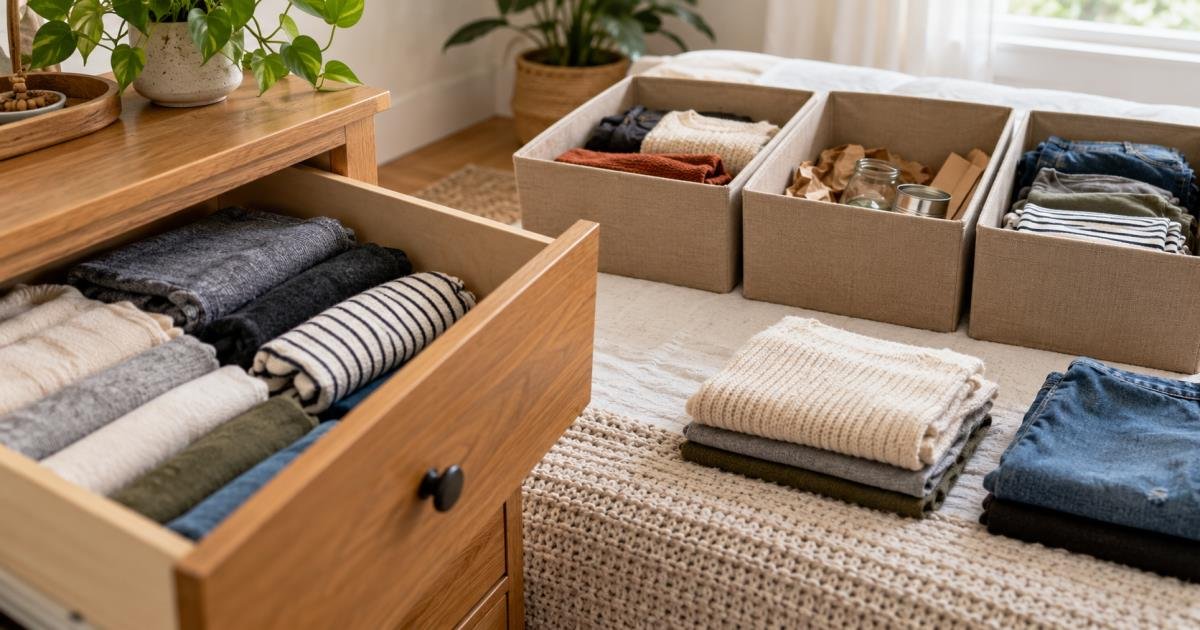
A lasting decluttering project is usually built from small decisions repeated over time. Start with one contained area, make a clear plan for what leaves your home, and stop before the task becomes exhausting.
Why a whole-house weekend rarely works
Decluttering often looks simple from the outside: remove what you do not use, then put everything else away. The difficult part is that every object asks for a decision. Some decisions are easy, such as tossing an empty box. Others involve money, memories, other household members, or uncertainty about future needs. When you try to make hundreds of decisions at once, fatigue can turn a useful project into a pile of half-sorted belongings.
A slower approach is not a failure of motivation. It is a way to protect your energy and keep your home usable while you work. The goal is not to own the fewest possible things. The goal is to make it easier to find, clean, store, and use what supports your real life now.
Begin with a small, finishable zone
Pick a place with clear boundaries: one junk drawer, the top of a dresser, a bathroom shelf, a single cabinet, or the area beside the front door. Avoid beginning with a garage, attic, sentimental box, or entire closet. Those spaces may eventually deserve attention, but they can require many decisions and may contain items that need special disposal.
Set a time limit of 15 to 30 minutes. Gather a trash bag, a recycling bag, a donation box, and a basket for items that belong in another room. You do not need decorative bins before you begin. Containers can hide an unresolved volume problem; first decide what actually needs space.
A simple sorting method
| Category | What it means | What to do next |
|---|---|---|
| Keep here | You use it in this space and can name its purpose. | Return it to an easy-to-reach home. |
| Move elsewhere | You use it, but it belongs in another room. | Place it in the relocation basket and move it after the session. |
| Donate or give away | It is usable but no longer supports your household. | Use a labeled box and choose a pickup or drop-off plan. |
| Recycle or discard | It is broken, expired, unusable, or ordinary household waste. | Follow local recycling and disposal rules. |
| Decide later | You truly need more information or time. | Limit this box and add a review date. |
The “decide later” category should stay small. It is useful for documents that need review or items shared with another person, but it should not become a permanent storage method. Write a date on the box and schedule a short follow-up session.
Use questions that reflect your present life
Instead of asking whether an item might be useful someday, ask more specific questions. Have I used this in the last year? If I needed it, would I know where to find it? Do I own a better version? Would I buy this again today? Is it serving my current household, or am I keeping it from habit?
These questions are not rules that force a particular answer. Seasonal gear, legal records, emergency supplies, family keepsakes, and specialized tools may be worth keeping even when they are not used frequently. The point is to make the reason deliberate rather than automatic.
Remove outgoing items promptly
A donation box on the floor can quietly become another form of clutter. At the end of each session, tie the trash bag, place recycling where it belongs, and put the donation box near the exit or in your car if that is safe and practical. Before donating, check what the organization accepts and whether items should be clean, complete, or bagged. Do not leave donations outside when a location is closed.
For items such as paint, batteries, chemicals, electronics, medications, or large appliances, do not assume they belong in household trash. Check local guidance and manufacturer instructions for safe disposal or collection programs.
Make storage match how you live
After reducing the volume, give remaining items simple homes. Frequently used items should be the easiest to reach. Store similar items together: mailing supplies near the place where you handle mail, pet supplies near the feeding area, and cleaning supplies where they are used safely. Labeling can help, especially in shared spaces, but labels work best after the category is clear.
Do not expect every surface to stay empty. A home should support activity. A small tray for keys, a basket for library books, or a current-project bin can make everyday life easier without becoming clutter. The important distinction is whether the item has an intentional temporary home.
Build a repeatable rhythm
Try a weekly reset: return items to their homes, empty the relocation basket, process mail, and review one small area. A monthly session can focus on one category, such as toiletries, pantry items, linens, or children’s clothing. Seasonal transitions are useful times to review outerwear, garden supplies, decorations, and sports equipment.
Common mistakes to avoid
- Emptying an entire room before deciding where things will go.
- Buying storage products before reducing what needs storing.
- Keeping donated items for weeks because the next step was not planned.
- Decluttering another person’s possessions without permission.
- Making emotionally difficult decisions when you are tired or rushed.
Frequently asked questions
How long should I declutter each day?
Fifteen to thirty focused minutes is enough for many people. The best duration is one you can repeat without leaving the area worse than when you started.
What if I regret donating something?
A small amount of regret is possible with any decision. Lower that risk by setting aside uncertain items briefly, while avoiding an unlimited “maybe” collection. Focus on whether the item is useful enough to justify the space it occupies now.
Should I organize before I declutter?
Usually no. Reduce first, then organize the items you intentionally keep. Otherwise, you may spend time arranging belongings that do not need to remain.
How do I handle sentimental items?
Leave them for a dedicated, low-pressure session. Start with easier spaces so you can practice decision-making before addressing memories and family history.
A useful next step is to keep one clearly labeled donation bag near the exit, so a finished decision does not return to the room.
Conclusion
Decluttering is more sustainable when it is treated as a series of small maintenance decisions rather than one dramatic event. Finish one contained space, move outgoing items promptly, and create simple homes for what remains. Over time, those small choices make daily routines easier and help your home better support the way you live.
Next, explore the Home Organization guides for practical systems for closets, kitchens, paperwork, and weekly resets.