Learn a New Profession: Pool Maintenance Basics for Beginners
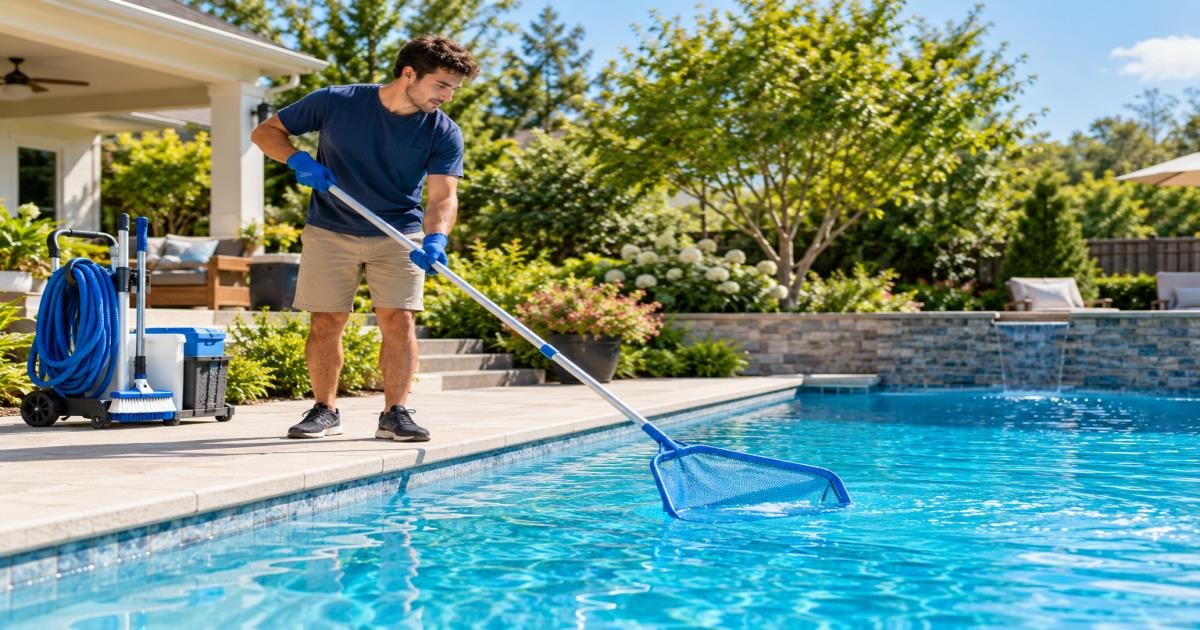
Pool maintenance can be learned in a small, practical sequence: observe the water, test it accurately, keep circulation equipment clean, and document what changed. Those habits can help a homeowner care for a residential pool and give a beginner a realistic introduction to the skills used in pool-service work. They are not a promise of employment, licensing, or income. Local rules, insurance, chemical handling requirements, and business registration requirements differ by state and city.
What a Pool Maintenance Professional Actually Does
A pool technician does more than make water look blue. Routine work may include skimming leaves, brushing walls, vacuuming debris, emptying baskets, checking circulation, testing water, recording results, and communicating clearly about visible equipment concerns. A technician also needs to recognize tasks outside a beginner’s scope, such as electrical repairs, gas heaters, underground leaks, structural cracks, and equipment that is unsafe to open.
The useful starting point is consistency. A pool can look clear while chemistry or circulation is out of balance, and a test result means little without knowing when it was taken, what was added, and how the water responded. Beginners should practice organized observation before offering services to anyone else.
Build Safe Habits Before Learning Chemistry
Read every product label and safety data sheet before handling pool chemicals. Store products in their original, closed containers in a dry, ventilated place away from children, pets, heat, and incompatible materials. Never mix chemicals, never reuse food containers for them, and never guess at a dose. Add products only as the label and local guidance direct. Protective equipment, ventilation, and safe storage are part of the job, not optional extras.
Pool equipment also deserves caution. Pumps, timers, heaters, and lights can involve electricity, pressurized water, gas, or specialized plumbing. A beginner can learn to identify parts and note unusual noise, leaks, or error messages, but should refer repairs and electrical work to qualified professionals. This boundary protects both the pool owner and the person learning the trade.
Learn the Basic Weekly Service Sequence
A simple service visit often starts with a visual inspection. Check the water line, surface debris, tile line, skimmer area, and surrounding deck. Use a leaf net to remove floating debris before it sinks. Empty baskets only after the pump is off when the equipment instructions require it, and inspect lids and seals for obvious damage. Brush steps, corners, and walls according to the pool surface and manufacturer guidance so material does not settle where circulation is weak.
Next, test the water with a reliable kit and write down the date, conditions, readings, and any product added. Test methods and recommended ranges depend on the sanitizer system, pool type, local conditions, and product instructions, so avoid copying an online dose into another pool. Clear records let an experienced supervisor or pool professional review a problem without relying on memory.
Practice With a Training Mindset
Begin at home, with permission from a pool owner, or through a supervised educational program. Create a checklist, take photos of equipment labels, and learn the vocabulary for skimmers, returns, filter housings, pumps, valves, and pool surfaces. Observe how leaves, storms, bather load, sunlight, and equipment run time affect a pool over several weeks. This turns general interest into repeatable skill.
Before accepting paid work, investigate local licensing, insurance, tax, and safety requirements. A community college, pool-equipment manufacturer, trade association, or experienced local professional may offer training that fits the rules where you live. Start by learning safely, communicate honestly about your experience, and avoid presenting yourself as qualified for repairs you have not been trained to perform.
Understand Water Care Without Guessing
Water chemistry is a measurement-and-recordkeeping skill, not a color judgment. A pool may look blue and still need attention. Learn what each test in an approved kit measures, how to take a sample without contaminating it, and how to follow that system's directions. Recommended treatment depends on the sanitizer system, the pool, local conditions, and product labels, so a dose copied from another pool is not a reliable plan.
Never combine chemicals or reuse food containers for them. If results are far outside the expected range, water is persistently cloudy, or there is a strong odor, pause and ask a qualified pool professional for guidance rather than adding several products at once. Safe storage, ventilation, label instructions, and protective equipment are as important as the test result.
Learn Filtration and Circulation Carefully
Filtration removes fine debris, while circulation helps treatment move through the water. Learn the manufacturer-approved cleaning method for the filter actually installed. Cartridge, sand, and diatomaceous-earth systems do not have identical procedures, and opening pressurized equipment can be hazardous. Shut equipment down and release pressure only as the manufacturer directs.
Keep notes on filter-cleaning dates, visible leaks, unusual pump noise, return flow, and pressure readings when the equipment provides them. Good notes help an experienced technician diagnose a change. Do not dismantle motors, heaters, electrical timers, lights, or plumbing connections to learn by trial and error.
Build a Responsible Service Routine
A beginner can practice a repeatable visit sequence: inspect the water and deck, remove surface debris, brush appropriate surfaces, check accessible baskets as the equipment instructions permit, test and record the water, then leave a clear note of what was observed. Photos of equipment labels and a simple checklist make it easier to learn names and avoid skipped steps.
Clear communication is part of professional conduct. A service note can say what was cleaned, which tests were performed, and what follow-up is recommended. It should not promise that one visit will guarantee perfect water. Weather, swimmers, debris, equipment condition, and source water all affect the result.
Know When a Specialist Is Needed
Refer electrical faults, gas heater concerns, structural cracks, major leaks, damaged drains, unfamiliar automation, and persistent water problems to qualified professionals. Never enter a pool to inspect a drain, light, or equipment problem. Before offering paid services, confirm local licensing, insurance, tax, and safety requirements; they vary by city and state.
Which Pool Skill Will You Practice First?
Create a Simple Learning Log
Keep a dated log for each practice session. Record weather, visible debris, equipment run time when known, test method used, readings, actions taken, and what changed by the next visit. This creates a useful learning record without guessing about cause and effect. It also teaches the habit of documenting work clearly before another person relies on your service.
Review the log at the end of each month. Look for questions that need manufacturer guidance or supervised training, not shortcuts. A technician who knows when information is incomplete is safer and more dependable than one who gives a quick answer without checking the equipment or label.
Start Small and Keep Learning
Learning pool care does not require pretending to be an expert on the first day. Start with the work that is visible, documented, and safe: recognizing debris, reading equipment labels, maintaining a clean work area, and writing useful service notes. As your knowledge grows, compare your observations with manufacturer manuals and supervised instruction instead of relying on short social-media tips.
A realistic path is to practice on one pool, develop a repeatable checklist, learn how local weather and usage change its needs, and then seek further training before taking on unfamiliar equipment. Reliability, safety, punctual communication, and accurate records are skills that matter as much as technical knowledge in any home-service role.
Begin with one dependable habit: a careful visual inspection, accurate recordkeeping, or a safe cleaning sequence. Build competence gradually, use product and equipment instructions, and be honest about the jobs you are not trained to perform. The home maintenance checklist can help you practice keeping clear records for recurring home-care tasks.