How to Improve Garden Soil With Compost and Organic Matter
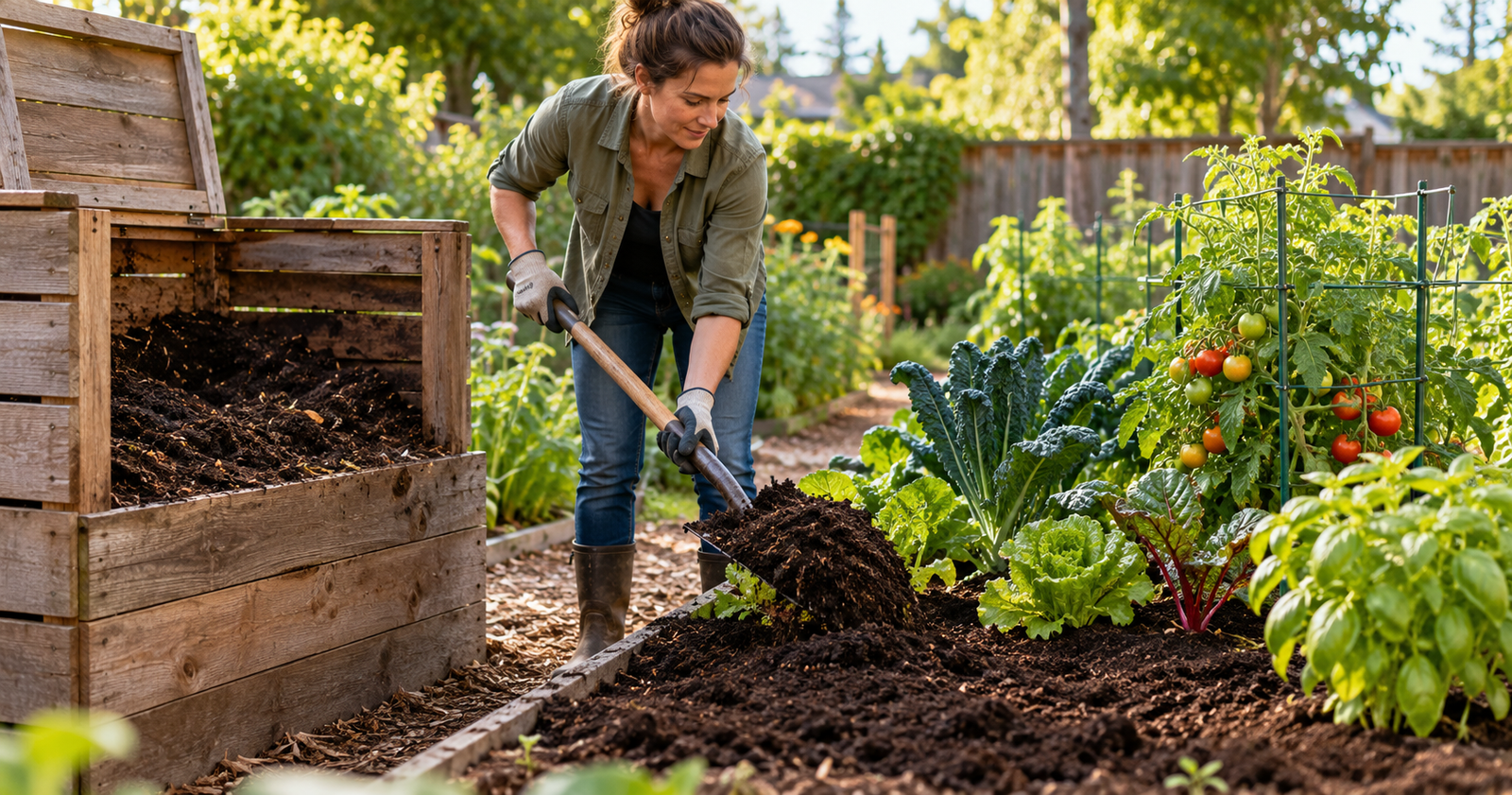
Good garden soil is not made in an afternoon. It improves when you observe how water moves, add organic matter thoughtfully, and give soil life time to work. Compost can make a bed easier to plant and help it hold moisture, but it is not a cure for every problem.
Start by observing the bed
After rain, notice whether water disappears, pools, or runs away. Squeeze a small handful of moist soil: soil that forms a hard, slick ball may be compacted, while soil that falls apart immediately may need more organic matter. A soil test from a local extension service is the clearest way to learn about nutrient or pH concerns; do not add amendments blindly.
Use finished compost
Finished compost is dark, crumbly, and earthy-smelling, with few recognizable ingredients. Spread a modest layer over the bed and mix it gently into the top few inches only when the soil is workable—not saturated. A surface layer can also act as mulch. Keep compost away from stems and trunks so moisture does not sit against them.
Avoid common shortcuts
| Shortcut | Why it can fail | Better approach |
|---|---|---|
| Adding fresh scraps directly to a planting hole | They can attract pests and temporarily disrupt roots. | Compost scraps fully before using them. |
| Tilling wet soil repeatedly | It can create clods and compaction. | Wait until soil crumbles in your hand. |
| Adding fertilizer for every weak plant | Excess nutrients can damage plants and waterways. | Check light, water, soil test results, and drainage first. |
Protect the soil you improve
Keep foot traffic off planting beds, use paths or boards when working, and cover bare soil with appropriate mulch. Plant roots, worms, and microbes all benefit from fewer disruptions. In a small garden, adding compost once or twice a year is often more useful than repeatedly changing products.
Build results season by season
Take a photo and note what you added, where, and when. Compare how the bed drains and how plants grow over a season. If water remains after rain, soil is contaminated, or you are changing a large area, get local professional guidance. Pair this work with watering garden plants carefully and choosing plants for your climate. Better soil is a patient foundation, not a fast fix.