How to Check Doors and Windows for Drafts
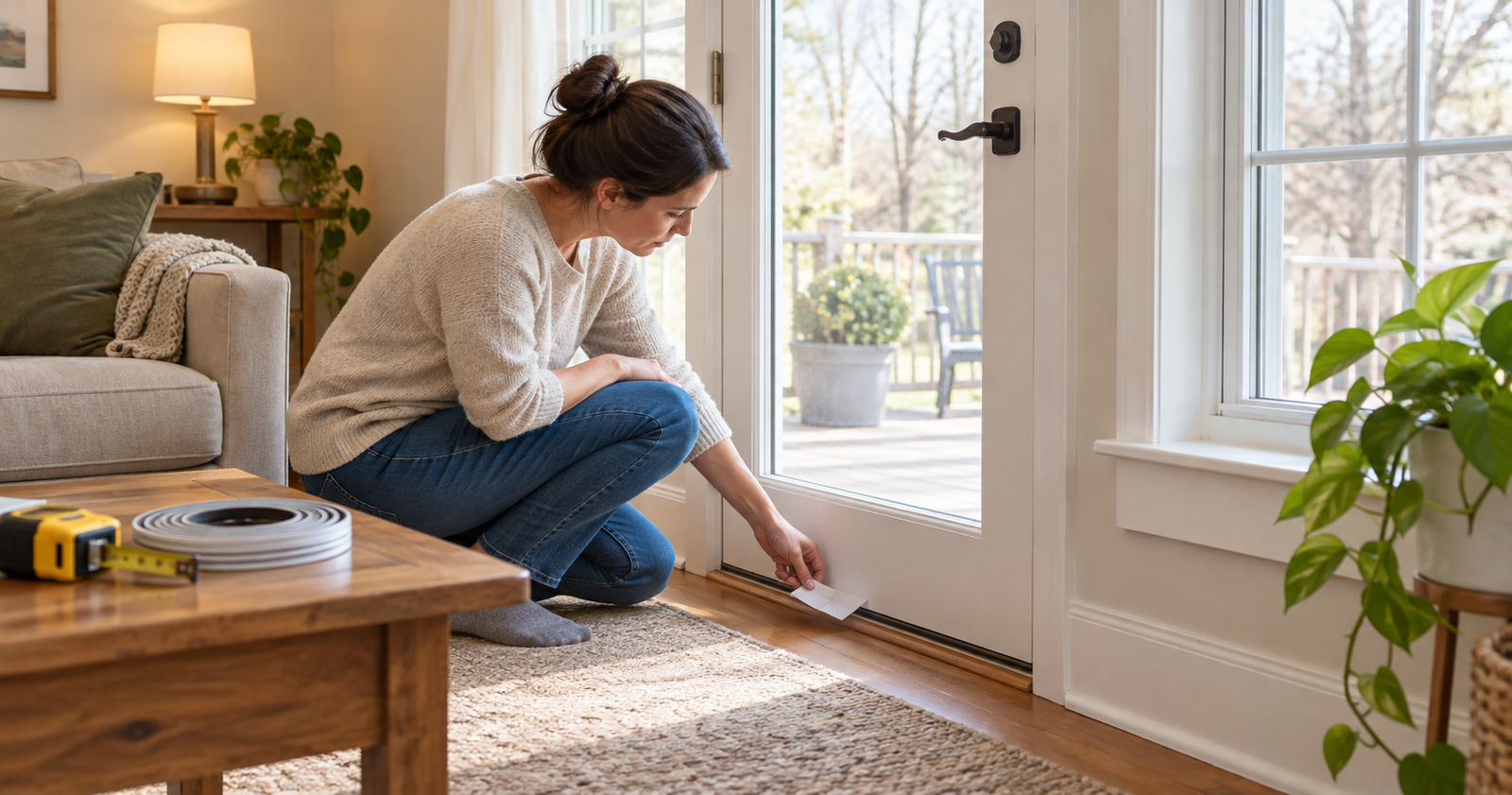
A draft is not always a dramatic rush of cold air. It can feel like a chilly chair near a window, a curtain that stirs when the heating system runs, or a room that never seems comfortable. A careful inspection can reveal straightforward gaps while helping you avoid “fixes” that interfere with drainage, ventilation, locks, or emergency exits.
Start with a calm, visual inspection
Choose a dry day and inspect one exterior door or accessible window at a time. Look at weatherstripping, door sweeps, window locks, caulk lines, trim, and the threshold. Cracked, flattened, missing, or loose material is useful evidence. So is daylight visible around a closed door from indoors, provided the light is not coming through a glass panel.
Before buying anything, operate the door or window normally. It should close and lock without unusual force. A door that rubs, will not latch, has soft trim, or shows water staining is not simply a weatherstripping project; document the condition and arrange a broader assessment. Do not block weep holes, drainage paths, or required ventilation openings just because they look like gaps.
Use simple, safe ways to find air movement
Move the back of your hand slowly around the edges of a closed door or window, then compare it with the nearby wall. A thin strip of tissue can show gentle air movement. Keep it away from flames and skip the old candle test: an open flame adds a fire risk and is unnecessary. If conditions are safe, compare the area on a windy day and again with the HVAC system on and off.
Write down what changes. A draft that appears only when heating or cooling runs may point to ductwork, a supply vent, a return-air path, or pressure differences in the house. A cold area after rain, especially with staining or peeling paint, deserves attention as a potential moisture problem rather than a quick sealant job.
Inspect exterior doors first
Exterior doors commonly leak at the bottom, along the latch side, or where worn weatherstripping no longer springs back. Check the sweep, the perimeter seal, the threshold, and the corners. Photograph the existing material before shopping; it is much easier to match a channel-mounted seal or screw-mounted sweep when you can compare it at the store.
A removable draft blocker may be useful as a short-term comfort measure at the base of a door. If you replace a sweep or seal, choose a product designed for that door and installation method. Test the door several times after a small section or adjustment. It must still latch, lock, and open as intended. Never tape permanently over a threshold or make a sealed door hard to operate.
Check windows without forcing them
First confirm that the window is fully closed and locked. A lock often pulls the sash into its designed seal. Remove loose debris from accessible tracks with a soft brush or vacuum attachment, then inspect existing seals for wear. Do not force a painted-shut, cracked, warped, or difficult window. Upper-floor windows, older assemblies, and insulated glass units can need specialized service.
Windows are designed to manage water as well as air. Caulk is not a universal remedy: placed in the wrong location, it can trap water or prevent normal movement. Condensation between panes, persistent fogging, soft trim, or stains below a window points to a problem beyond ordinary interior weatherstripping.
Match the response to what you find
| What you notice | A sensible first step | When to stop and get help |
|---|---|---|
| Compressed door weatherstripping | Measure it, identify its mounting style, and replace it with a compatible product. | The door will not latch or the frame is damaged. |
| Gap under a normally operating door | Inspect the sweep and threshold; use a removable blocker while you identify the correct part. | There is rot, water entry, or an uneven threshold. |
| Cold spot near a closed window | Check the lock, track cleanliness, and visible seals; compare with HVAC on and off. | Glass is broken, panes are fogged, or the frame is loose. |
| Draft with moisture marks | Photograph the area and note weather conditions before covering it. | Water is actively entering, trim is soft, or electrical equipment is nearby. |
Plan materials before making a minor repair
Measure the opening and photograph the old sweep, seal, or trim. Products may attach with adhesive, screws, or a particular channel, and the method matters as much as the color. Read the package for temperature limits, surface preparation, cure time, and paint compatibility. Keep the receipt and unused material until you know the door or window operates normally.
Work on one clear problem instead of sealing every line you can see. For example, a door with an obviously flattened sweep may be a reasonable first project. A window with water marks is not. This approach protects the home’s intended drainage and gives you a useful reference for future maintenance.
Know when the issue is not a draft
Uneven temperatures can come from insulation gaps, duct leaks, blocked returns, thermostat placement, or equipment problems. Keep supply and return vents clear; covering them can make the system work worse. Compare more than one room and note when discomfort occurs. If air movement appears only while the system runs, include that observation in a maintenance request.
Call a qualified professional for broken glass, persistent water intrusion, structural movement, damaged frames, electrical concerns near a window, or any door that is part of a fire-rated assembly. In a rental, report the condition through the property manager rather than altering the building. A door or window used for emergency escape must remain operable.
Make the check part of seasonal maintenance
Inspect exterior doors and accessible windows before the hottest or coldest part of the year. Clean tracks, test locks, and check that screens or storm components are fitted or stored according to their instructions. Mild weather gives you time to identify a part and make a small compatible repair without rushing.
Add the observation to your home maintenance checklist. Record the location, the weather, what you changed, and how the door or window operated afterward. A focused inspection can make a room more comfortable, but the most useful result is knowing when a gap is minor and when it is evidence of a larger issue.