How to Organize a Small Kitchen With Limited Cabinet Space
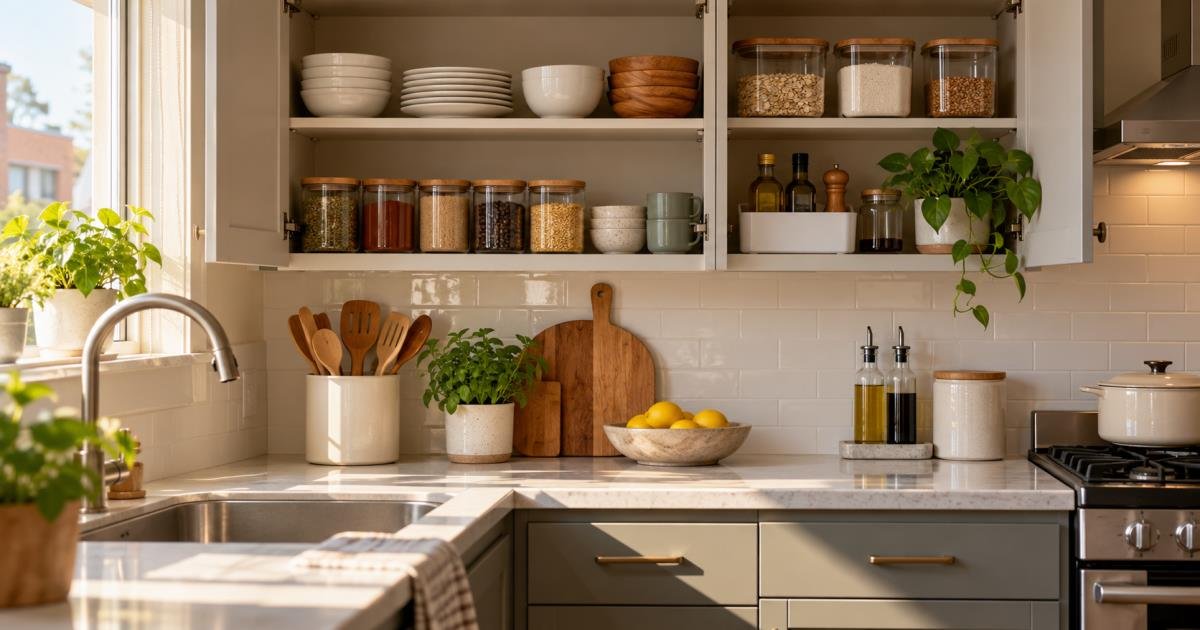
A small kitchen becomes easier to use when the items closest to the work area match your daily routines. Start by reducing duplicates, then assign each cabinet, drawer, and counter zone one clear job.
Measure the problem before buying storage
Small kitchens often feel crowded because several kinds of items compete for the same few cabinets: food, cookware, dishes, cleaning supplies, school papers, pet supplies, and appliances. Buying bins before deciding what belongs in the kitchen can add another layer of clutter. Begin by walking through one typical meal. Notice where you wash, prep, cook, serve, pack leftovers, and clean. Those steps reveal the zones your kitchen needs most.
Then take a quick inventory. Pull out one cabinet or drawer at a time, not the entire kitchen. Set aside expired pantry goods, damaged utensils, chipped dishes you no longer use, and duplicates that do not serve a real purpose. If you have three spatulas that all work, keep the number that makes daily cooking comfortable rather than the number that fills the drawer.
Create zones that follow the workflow
A useful kitchen does not require a perfect layout. It needs a layout you can remember. Put plates, bowls, and glasses close to the dishwasher or drying rack if that is where they are most often put away. Keep pots, pans, and cooking utensils near the stove. Store food containers near the refrigerator or prep area. Place coffee and breakfast supplies together if mornings are busy.
| Zone | Useful items | Best general location |
|---|---|---|
| Prep zone | Knives, cutting boards, mixing bowls, measuring tools | Near the clearest counter area |
| Cooking zone | Pots, pans, spatulas, oils, frequently used spices | Near the stove, away from heat where appropriate |
| Cleaning zone | Dish soap, towels, dishwasher supplies | Near the sink or dishwasher |
| Storage zone | Food containers, foil, wraps, bags | Near the refrigerator or packing area |
| Pantry zone | Dry goods and snacks | In the most accessible food cabinet |
The best location depends on your kitchen’s actual layout. The table is a starting point, not a strict rule. If a cabinet is awkward to reach, reserve it for seasonal platters, specialty baking tools, or backup supplies rather than everyday objects.
Use cabinets in layers
Many cabinets waste vertical space because only one row of items sits on the bottom shelf. Before adding a shelf riser, check whether stacking is genuinely safe and stable. Plates may stack neatly, while heavy cookware or fragile glasses may not. A small riser can make mugs or short pantry items easier to see, but it should not create a tower that must be moved every time you need something.
Group items by function and frequency. Everyday dishes should be within easy reach. Backup paper goods, rarely used serving pieces, and occasional appliances can live on higher shelves. If you need a step stool, choose a stable household model and use it according to its instructions; do not stand on chairs, counters, or drawers.
Make drawers work harder
Drawers are valuable because they make items visible without removing everything in front. Keep one utensil drawer for tools used most often. If space allows, dedicate a shallow drawer to wraps, reusable bags, and food-storage lids. Drawer dividers can help, but even simple groups work if you return items consistently.
Lids are often the hardest category. Match each lid to a container and remove cracked or permanently warped pieces. Store the remaining lids upright in a narrow bin or divider so you can scan them instead of digging through a pile. Do not keep containers merely because they once came in a matching set; keep the pieces you regularly use and can store safely.
Keep counters intentionally clear
Counter space is both work space and visual space. A countertop packed with appliances can make a small kitchen feel even smaller. Keep out only appliances used often enough to justify the space. A coffee maker used daily may deserve a permanent home; a waffle maker used a few times each year probably does not.
Create a small landing spot for mail, keys, or grocery lists if those items regularly enter through the kitchen. A tray or shallow basket can be better than allowing papers to spread across the counter. Review that landing spot during a weekly reset so it remains temporary rather than becoming a paper-storage system.
Control pantry overflow
Pantries and food cabinets become crowded when backup supplies are purchased without checking what is already there. Before shopping, look through the cabinet and group similar foods. Place older items where they will be used first and check dates according to the product’s instructions. Avoid transferring food into unlabeled containers if doing so removes preparation, allergy, or expiration information.
Clear containers can help you see dry goods, but they are optional. The more important habit is keeping like items together: breakfast foods, snacks, baking supplies, canned goods, and lunch items. A small basket can contain packets or smaller items, but do not use deep bins where everything disappears at the bottom.
Plan for shared kitchens
When several people use the kitchen, organization must be easy enough for everyone to follow. Put frequently used items where children or shorter adults can safely reach them when appropriate. Keep sharp tools, cleaning products, and hazardous materials secured according to product instructions and household safety needs. If roommates share shelves, use clear boundaries rather than moving another person’s belongings without discussion.
Common mistakes to avoid
- Buying organizers before reducing duplicates and expired food.
- Using high cabinets for everyday dishes.
- Storing heavy items where they are hard to lift safely.
- Leaving lids, wraps, and containers as separate ungrouped piles.
- Using the counter as permanent storage for mail and shopping bags.
Frequently asked questions
How do I organize a kitchen with almost no pantry space?
Use one cabinet as a food zone, group foods by type, keep only realistic quantities, and rotate older items forward. A small rolling cart may help if it can be parked safely without blocking walkways.
Should I decant all pantry food into containers?
No. Decanting is optional. It can improve visibility for some dry goods, but original packaging often contains important dates, directions, and allergy information.
What should stay on the counter?
Keep only items used often enough to earn the space, plus a small intentional landing area if needed. The answer differs by household and cooking habits.
How often should I reset a small kitchen?
A brief daily reset helps with dishes and counters. A weekly review of food, papers, and misplaced items prevents small problems from building up.
Conclusion
Limited cabinet space does not require a complicated storage system. Reduce what your kitchen does not need, arrange what remains around your daily workflow, and make the easiest-to-reach places serve the tasks you do most. Small changes that are easy to maintain are more useful than a picture-perfect arrangement that falls apart after a busy week.
Return to the Home Organization section for guides on closets, paperwork, and weekly routines.